Condensation on windows: Auckland's winter problem
Condensation is warm, damp indoor air meeting a surface cold enough to wring the water out of it. In Auckland the damp does more of the work than the cold. Humidity at 9am averages 82% across the year and 88% in July, so there's plenty of water in the air, and in an older house the coldest surface is the glass or the aluminium frame around it.
You can put less water into the air, or make the glass and frame warmer. Start with the free fixes. If the windows still run wet once the house is aired and heated, it's time to look at the glass.
Why Auckland windows run wet
Warm air holds more water than cold air, and in a single-glazed house the glass is where the room air gets cold enough to drop it. Industry figures put a single-glazed timber window at about R0.19, against R0.41 for standard double glazing in the same frame in the Building Code's reference table.
Auckland Airport records only about nine ground frosts a year. A mild, wet night, a family breathing and showering, and a pane of single glass that's only just cold enough are all it takes, so the windows stream on mornings that never came near a frost.
~9
ground-frost days a year at Auckland Airport
82%
9am humidity across the year, rising to 88% in July
1 in 6
Auckland homes with mould, and 1 in 5 damp
Should you be worried about it?
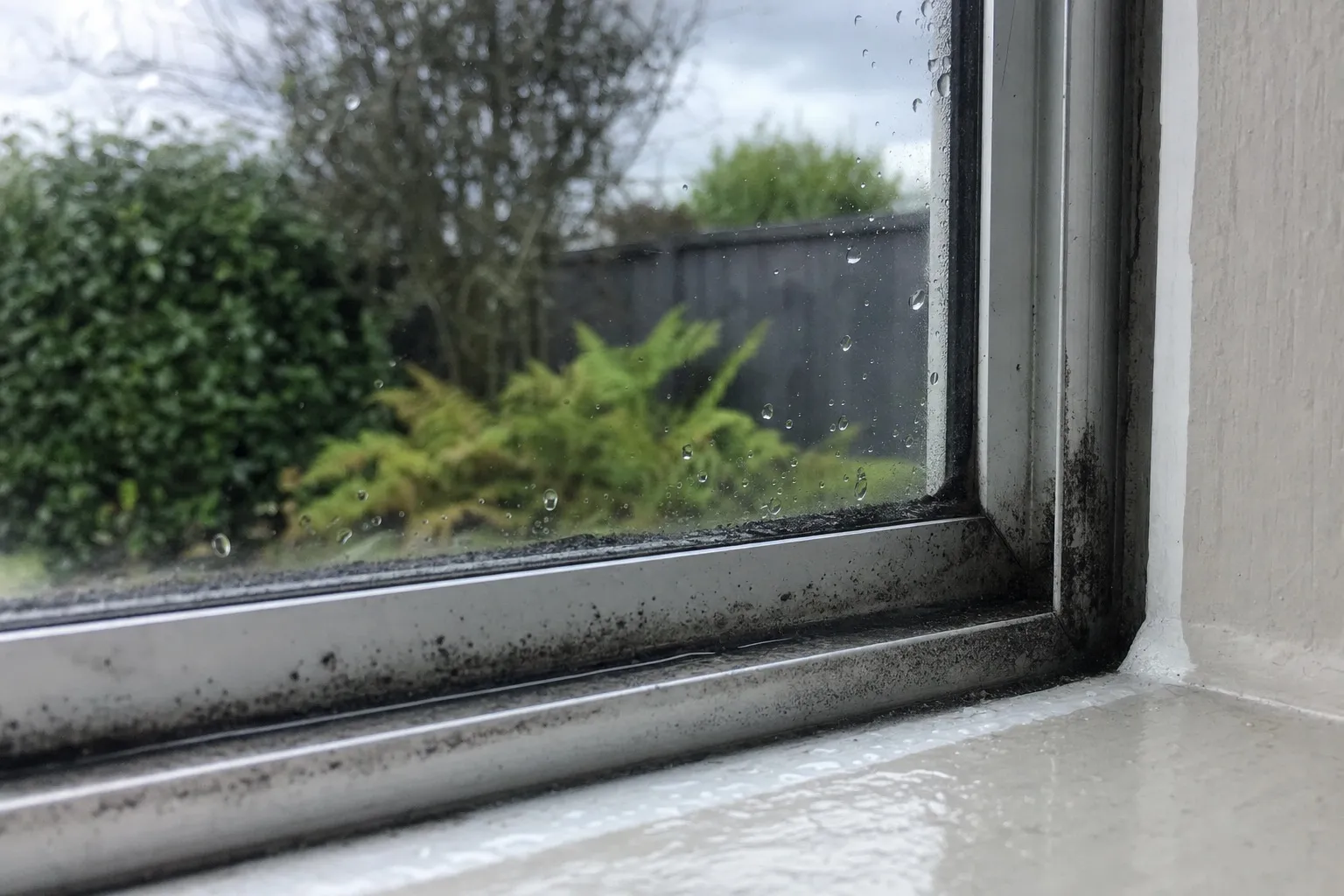
A wet window on a winter morning isn't dangerous in itself. The trouble is where the water goes. On a timber sill it soaks in and rots the timber, and that's how a retrofit job turns into a replacement job. In the corners of an aluminium frame, or on curtains that touch wet glass every morning, it grows black mould. Stats NZ found mould in about one in six Auckland homes in 2023.
Three signs need taking seriously. Black mould you can't wipe off, a musty smell that doesn't go when you open up, and a sill that's wet every morning through the winter all mean the house is damp. That's a health matter before it's a window matter. The window is just where you see it.
Water between the panes
Fog or water between the two panes of an existing double-glazed window is a different problem. The unit's edge seal has failed and damp air has got into the gap, so nothing you do from the room side will clear it. The unit needs replacing, but the frame usually doesn't.
If you're looking at an older house with double glazing, note any fogged units. The rest were made at the same time, and the seals age together.
The free and cheap things that help
Deal with the moisture before the glass. These cost nothing or close to it.
Get the steam out at the source
Showers and cooking put the most water into the air. Shut the bathroom door, run the extractor if there is one, and open that room's window rather than letting the steam into the hall.
Dry the washing somewhere else
Washing dried inside puts its water into the room. Hang it outside when the weather lets you. If it has to be inside, pick one room that isn't a bedroom, shut the door and open its window.
Open the house up every day
Open windows on two sides of the house for a few minutes each day, even in winter, so the damp air goes out and drier air comes in.
Heat steadily rather than late and hard
A room heated a little and kept there condenses less than one heated hard in the evening and left to go cold overnight. If your heating has a timer, use it.
Curtains closed before dark
EECA puts the saving at about $80 to $90 a year. Open them again in the morning so the glass behind them can dry.
Window film, for a season
Shrink-film kits are the cheap stopgap. EECA says they last about a season and don't stick to aluminium frames, which rules them out for aluminium joinery.
Do those first, then see whether the bedroom glass is still wet in the morning.
When the windows are the problem
If the house is aired, the shower has an extractor, nothing dries inside, the bedrooms are heated steadily and the glass is still wet every morning, the glass is your cold surface. Single glazing can't be made warm enough, and neither can a plain aluminium frame.
Retrofit double glazing puts a sealed unit into the frames you have, and it's the cheaper way to do it. New joinery is for frames that are rotten or too shallow to hold a unit. Here's how the two compare for double glazing in Auckland. The frame matters too. In a plain aluminium frame the glass dries but the frame keeps sweating, because the code's reference table has that window at R0.24 against R0.30 with a thermal break, R0.37 in uPVC and R0.41 in timber. If the frame is the wet part, read about double glazing aluminium windows first.
Which fix, by symptom
- Wet glass, dry frame. The glass is the cold surface, so retrofit sealed units into the frames you have.
- Wet glass and a wet aluminium sill. A retrofit dries the glass, but only a thermal break or a different frame will dry the sill.
- Fog between two panes. The unit has failed, so replace it and keep the frame.
- Mould in the corners but dry windows. The problem is moisture rather than the glass, so start with ventilation and heating.
Will double glazing stop it?
On the glass, mostly. The inner pane stays near room temperature, so it's no longer the coldest thing in the room and the water stops forming there. It doesn't take the water out of the air, though. In a house that's never aired, the moisture finds the next coldest surface, such as the frame, a ceiling corner or the back of a wardrobe on an outside wall. People ask on the forums whether double glazing just moves the condensation somewhere else, and in that kind of house it can.
You need all three. Air the house, heat it steadily and warm the glass. Heating is about 4% of an Auckland home's energy use in Stats NZ's modelling, so the case for double glazing here was never the power bill. It's there to keep the glass dry so mould doesn't grow on it.
Condensation questions
What causes so much condensation on my windows?
Damp air meeting cold glass. Humidity at 9am averages 82% across the year in Auckland, and showers, cooking, washing dried inside and breathing all add to it. In an older house the coldest surfaces are single glass and plain aluminium frames, so that's where the water lands.
Should I be worried about condensation on windows?
Not about the water itself, but about where it goes. On a timber sill it causes rot, and in the corners of a frame or on curtains it grows mould. Black mould you can't wipe off, a musty smell or a sill that's wet every morning through winter mean the house is damp, and that's a health matter first.
How do I stop condensation on my windows?
Cut the moisture first. Run the extractor and shut the door when you shower or cook, dry washing outside or in one closed room with the window open, open the house up for a few minutes each day, and heat the rooms you use steadily. If the glass is still wet every morning once the house is drier, it needs double glazing to warm it.
Can condensation between windows be fixed?
Yes, by replacing the sealed unit. Fog or water between the panes means the edge seal has failed, and nothing done from the room side will clear it. The frame usually stays, and the installer or a glazier measures the unit, has a new one made and fits it.
Windows still wet after all that?
Send your details through the contact page and the installer will look at the frames with you and say whether they'll take a sealed unit. If you'd rather read first, start with what a retrofit involves.