Sealed units into the frames you already have
Retrofitting double glazing into Auckland's existing windows
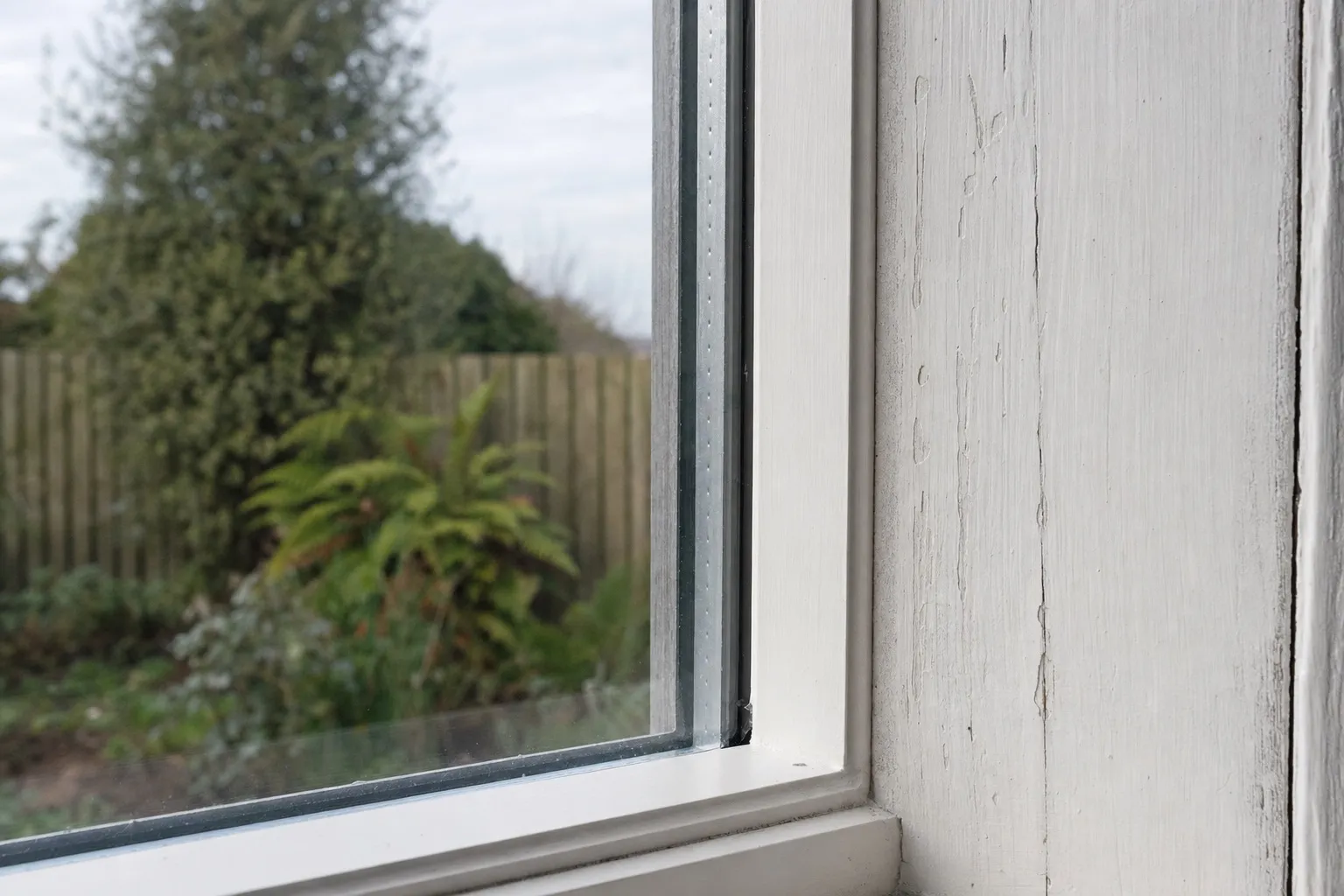
Retrofit double glazing keeps your frames where they are and changes only the glass, so the single pane comes out and a sealed double-glazed unit goes into the same opening. It suits most of Auckland's timber sashes and 1960s to 90s aluminium joinery, and it's the cheaper way to get windows that stay dry in July. Send your name and number and an Auckland installer will ring to book a measure.
Get a quoteNot every frame will take a unit. Slim older aluminium sections, rotten sashes and frames that have gone out of square get replaced, and the installer should tell you which at the measure.
Can your frames take a sealed unit?
A sealed unit is two panes with a spacer between them, so it's much thicker than the pane it replaces and needs a rebate deep enough to hold it. In aluminium, that depends on the section. Most 1960s to 90s joinery has the depth or takes an adaptor bead. Some older, slimmer sections have no room at all.
Timber is routed out to take the thicker unit, with a new bead to hold it in. The trouble is rot and twisting. Installers won't fit a unit over soft timber, so a rotten bottom rail gets repaired or the sash remade first. A twisted sash needs sorting before a rigid unit goes in.
Some frames can't be saved. If there's nowhere to fix a bead, the timber is too far gone to repair, or the frame leaks at the joints, the window gets replaced.
What changes after a retrofit, and what stays the same
A retrofit only changes the glass, so it fixes some problems with old windows and not others.
What changes
- Condensation stops forming on the glass. The inner pane sits near room temperature, even on a July morning at 88% humidity.
- Less heat gets out through the glass. EECA says a poorly insulated house can lose up to 40% of its heating energy through the windows, and double glazing cuts that to 25% or less. Space heating is about 4% of an Auckland home's energy use, so you'll notice it in the room more than on the bill.
- The house gets quieter. Two panes with a gap between them let through less sound than one.
What stays the same
- A standard aluminium frame stays cold. It's still one piece of metal from outside to inside, so it can run wet on a damp morning while the glass beside it is dry. There's more on double glazing aluminium windows if that's what you have.
- A damp house stays damp. One in five Auckland homes is damp and one in six has mould. New glass changes where the water lands, and a house that never gets aired still needs airing. Here's what does and doesn't stop condensation.
- Draughts around an old sash don't stop. The unit seals the glass, not the gap between sash and frame, so ask for draught seals in the same quote.
Timber, aluminium and ranchsliders in Auckland houses
Start with when the house was built. Double glazing became effectively required for new Auckland homes from 30 September 2008, so a house built since then most likely has it already. Some of the older ones have been retrofitted too.
Villas and bungalows with painted timber sashes take a slim unit in a deepened rebate behind a new bead. Casements and awnings are the simplest. A double-hung sash needs its cords and weights sorted too, because the glass gets heavier. We've gone into double glazing wooden windows in more detail.
A retrofit most often makes sense on aluminium joinery from the 1960s through the 1990s. The frames don't rot and they're usually still square. Monolithic-clad houses from the 1990s and 2000s are harder. The windows are often tied up with problems in the walls.
Ranchsliders are the exception. An old ranchslider with a worn track usually isn't worth retrofitting, and door glass has to be safety glass anyway, so most sliders get replaced. Published Auckland figures put a new aluminium one at about $4,500 to $7,000. Ask for the slider and the retrofits on the same quote. There's more on choosing between retrofit and replacement.
2008
when double glazing became effectively required on new Auckland homes
3 in 4
Auckland homes built before that rule, roughly
R0.19
about what a single-glazed timber window rates
Glass choices for a mild, humid climate
Are low-E and argon worth paying for in a city with about nine ground frosts a year? In Auckland, low-E mainly keeps the inside pane warmer on a damp morning, and that's the surface condensation forms on.
Low-E coating
It's a thin coating on one pane that reflects heat back into the room. On the code's reference table, standard double glazing in an aluminium frame rates R0.24 and the low-E and argon version R0.35. In timber the same step is R0.41 to R0.71. EECA puts the cut in heat lost through the window at up to 30%.
Argon in the gap
Argon is heavier than air, so less heat crosses the gap. EECA puts it at 5 to 20% less heat lost through the window. It doesn't always show up as its own line on a quote, so ask whether the unit has it.
Laminated for the street side
Laminated glass is two layers bonded with an interlayer. It cuts down traffic noise, so ask for it in rooms that face the road. It also counts as safety glass where the code asks for that.
Safety glass where the code asks for it
NZS 4223.3 requires it where someone could walk or fall into the glass, which covers doors and side panels, low panes, bathrooms and stairways. A plain pane in one of those spots may have to be upgraded when it's replaced, even though the job needs no consent.
Got frames you're not sure about?
Leave your name and number and the installer will ask about the frames and the age of the house when they call.
What to expect on install day
A retrofit runs in three stages, and at each one there's something to ask before you sign.
- 1
The measure
Someone measures every window and looks at each frame, and you should be told then which windows won't take a unit and why. Ask what making good is included, because retrofit quotes often leave the paint to you, and whether a Licensed Building Practitioner will do or supervise the work.
- 2
The wait
The units are made to the measured sizes, so there's a gap between paying a deposit and the install. Ask for a realistic date, and ask what happens if a unit turns up mis-cut.
- 3
The install
Each window is done in turn. The old glass comes out, the rebate is cleaned and routed or fitted with an adaptor, the unit is bedded in, and new beads or seals go on. Every residential building job carries a 12-month defect repair period under the Building Act.
What retrofit costs in Auckland
Retrofit is priced per window, not per pane. We've also worked through a three-bedroom house and how to read a quote.
- Retrofit, standard window~$400–800
- Retrofit, large living-area window~$800–1,500
- Typical 3-bedroom retrofit$12,000–28,000
Published Auckland installer pricing for 2026. Most sources don't say whether GST is included, so check before you compare a quote.
Questions about retrofitting
Can you retrofit double glazing to existing windows?
Yes, if the frame is sound and deep enough to hold a sealed unit. That covers most timber sashes in good paint and most aluminium joinery from the 1960s on. The rest get replaced.
How much does retrofit double glazing cost in NZ?
In Auckland, published 2026 installer pricing is about $400 to $800 for a standard window and $800 to $1,500 for a large living-area window, and a typical three-bedroom house comes to $12,000 to $28,000.
Is retrofit double glazing worth it in NZ?
In Auckland it's about condensation and comfort more than the power bill. If the windows run wet most winter mornings and the frames are sound, a retrofit is usually the cheapest fix for the glass. There's more on when a retrofit is enough and when the frames have to go.
Is double glazing better now than 20 years ago?
The glass is. Low-E coatings and argon fill are now ordinary options, and twenty years ago a new Auckland house didn't even have to be double glazed.
Will my hinges and stays be upgraded for the heavier glass?
Only if the quote says so. A sealed unit weighs more than the single pane it replaces, and a sash left on its original hinges and stays can drop or refuse to stay open. Ask which windows get new hardware and, on a double-hung sash, whether the weights or balances are being adjusted.
Do I need building consent to retrofit double glazing?
Usually not. Replacing windows or glass in an existing house of up to two storeys is exempt under Schedule 1, exemption 8 of the Building Act, as long as the window being replaced hasn't failed its durability requirement early (generally 15 years) and the work doesn't affect a specified system. It still has to meet the Building Code, including the safety glass rules.
Which of your windows will take a unit?
Send your name and number and the installer will ring to book a measure and tell you, window by window, which ones can be retrofitted and which can't.